
When Should a Golf Course Replace Its Cart Fleet?
A reliable golf cart fleet supports player movement, cart-hire revenue and the daily operation of an Australian golf course.
When every cart is charged, available and presented consistently, players rarely think about the work happening behind the scenes. When batteries begin fading, carts become unavailable or breakdowns interrupt a round, the fleet quickly becomes part of the customer experience.
There is no single age at which every golf cart must be replaced. Usage, terrain, maintenance history, battery condition, parts availability and presentation all matter.
The better question is whether your existing fleet can still deliver the reliability, availability and experience your club needs at a reasonable operating cost.
From EcoGlide’s experience working with Australian golf courses, the most useful warning sign is often not the age shown on the vehicle record. It is the growing number of carts that staff hesitate to allocate during busy periods.
The following checks can help your club decide whether to continue repairing its carts, replace the fleet in stages or begin planning a complete fleet replacement.
1. Carts Are Regularly Unavailable
Occasional repairs are expected in any working fleet. The concern begins when several carts are frequently unavailable, waiting for parts or being held back because staff do not trust them to complete a round.
If your club owns 30 carts but can only confidently allocate 24, the remaining vehicles are no longer only a maintenance issue.
Reduced availability can affect:
• Cart-hire revenue
• Competition planning
• Member bookings
• Visitor experiences
• Staff workload
• The number of spare carts available
Start recording:
• How many carts are unavailable each week
• The average number of days each cart remains unavailable
• Repeat faults affecting the same vehicles
• How often carts need to be swapped during a round
• How many bookings cannot be fulfilled
These figures provide a clearer picture of fleet performance than repair invoices alone.
Supporting Golf at Balgal Beach
Mystic Sands is located at Balgal Beach on the northern beaches of Townsville, approximately 40 kilometres north of the city.
Surrounded by native bushland, mountain views and coastal scenery, Mystic Sands offers a relaxed nine-hole golf course with 18 tees. Golfers can enjoy a full par 72 round across a layout designed to accommodate both experienced players and casual visitors.
The wider Mystic Sands facilities also include lawn bowls, a licensed restaurant and bar, RV camping, a swimming pool and a tennis court.
As a community-focused destination welcoming local golfers, visitors and travellers, dependable golf cart availability is an important part of the overall customer experience.
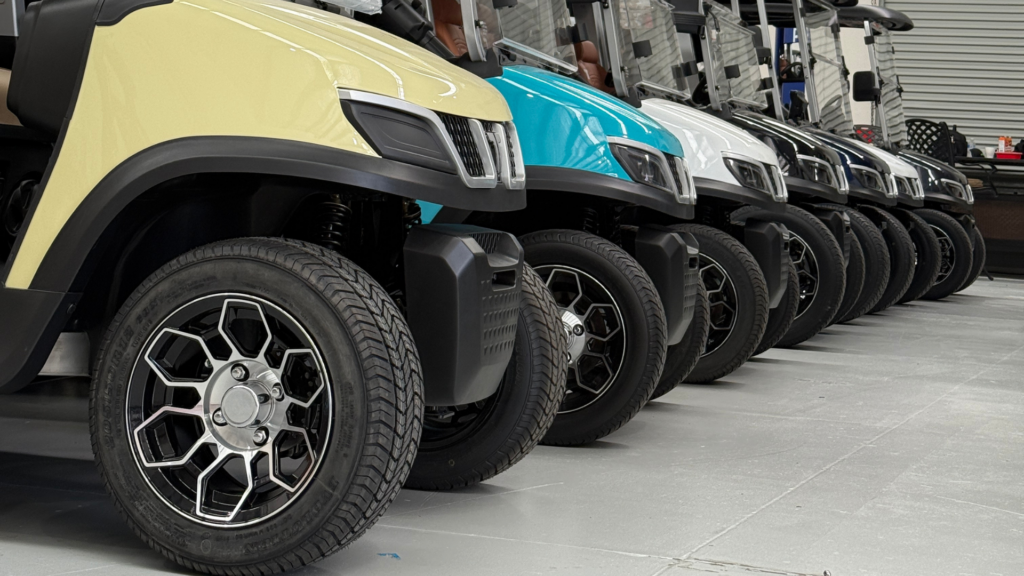
The arrival of six new Tara lithium golf carts will provide Mystic Sands with modern vehicles for transporting golfers around the course while strengthening the professional presentation of its cart fleet.
2. Maintenance Costs Continue to Increase
An older golf cart can often be repaired, but repairability does not automatically make another repair the best financial decision.
Brakes, suspension, steering, tyres, chargers, controllers, motors and electrical systems can all require more attention as a fleet ages.
Review the complete cost of keeping the fleet operational over the past 12 to 24 months.
Include:
• Replacement parts
• Servicing and labour
• Battery testing and replacement
• Charger repairs
• Vehicle transport
• Staff time spent managing faults
• Lost cart-hire revenue
• Emergency and after-hours repairs
When spending continues to rise without improving reliability, replacement should be assessed alongside further repairs.
A cheaper repair today may still become an expensive decision if the cart develops another fault several weeks later.
3. Batteries No Longer Complete the Required Rotation
Battery performance is one of the clearest indicators of fleet health.
A cart that once completed the club’s normal daily rotation may begin losing power earlier, slowing on hills or requiring charging between rounds.
Before replacing the vehicle, have the battery, charger and electrical system properly tested. A poor connection, charging fault or individual battery issue may be repairable.
However, when battery problems begin appearing across an ageing fleet, the club should compare the total cost of replacing the battery systems with the cost and operational benefits of moving to a newer lithium fleet.
Lithium golf carts can provide:
• No routine battery watering
• Reduced corrosion around battery terminals
• More consistent power delivery
• Convenient charging
• Reduced day-to-day battery maintenance
• Cleaner fleet charging facilities
Actual range will depend on the battery capacity, vehicle model, course terrain, passenger load, tyre pressure, driving style and operating conditions.
4. Fleet Performance Has Become Inconsistent
Consistency matters when operating a golf cart fleet.
Players should not need to know which cart has the strongest battery, which one struggles on a particular hill or which charger only works intermittently.
An inconsistent fleet makes daily allocation harder for staff and creates an uneven customer experience.
Common warning signs include:
• Noticeable differences in speed or range
• Unpredictable battery indicators
• Different braking or steering feel between carts
• Intermittent charging problems
• Recurring noises or vibrations
• Lighting, USB ports or accessories regularly failing
• Certain carts being avoided by staff
Once employees have developed an unofficial list of carts they prefer not to use, management should investigate whether those vehicles remain commercially dependable.
5. Parts and Technical Support Are Becoming Difficult to Access
A minor fault can leave a cart unavailable for weeks if the correct component cannot be sourced.
This becomes more common when a model has been discontinued, the original supplier is no longer operating or the vehicle has limited Australian support.
Before continuing to invest in an older fleet, consider:
• Whether replacement parts are available in Australia
• How long parts normally take to arrive
• Whether technicians can service the model
• Whether diagnostic equipment is available
• Whether the battery and charger remain supported
• Whether the manufacturer and Australian supplier remain active
The lowest purchase price does not always result in the lowest operating cost.
A cart can become expensive to own when downtime, parts delays and limited servicing support are taken into account.
6. The Fleet No Longer Reflects the Course
Golf carts are among the few operational assets that members and guests use directly.
Faded body panels, damaged seats, cloudy windscreens, mismatched accessories and unreliable weather covers can weaken the overall impression of the facility.
Fleet presentation is particularly important for:
• Resort golf courses
• Private clubs
• Corporate golf events
• Tourism destinations
• Wedding and event venues
• Clubs focused on membership growth
• Courses increasing green fees or cart-hire rates
A coordinated fleet with club branding and individual allocation numbers can improve presentation while making daily fleet management easier.
7. Safety Concerns Are Increasing
Issues involving brakes, steering, tyres, suspension, seatbelts, lighting or electrical systems require prompt professional assessment.
Accurate servicing and inspection records can help identify whether a fault is isolated or beginning to appear across the fleet.
If several carts require repeated safety-related repairs, replacement may provide a more reliable solution than continuing with temporary fixes.
Any vehicle with a known safety concern should be removed from operation until it has been properly assessed and cleared for use.
8. The Fleet No Longer Suits Course Operations
A fleet can remain operational while becoming unsuitable for the way a golf course now works.
Your course may have experienced:
• Increased cart demand
• More competitions and corporate events
• Additional hills or longer travel distances
• Changes to cart paths
• Higher visitor numbers
• Greater demand for weather protection
• New accessibility requirements
• Expansion into resort or community transport
A cart selected several years ago may no longer provide the range, comfort, storage or terrain capability the course requires.
Fleet replacement creates an opportunity to reassess passenger demand, charging windows, course gradients, accessories, storage facilities and expected daily rotation.
Clubs should avoid automatically purchasing the same configuration without checking whether their operating requirements have changed.
9. Member and Visitor Feedback Is Changing
Members and visitors may notice fleet problems before management sees the complete financial impact.
Comments about weak batteries, uncomfortable seats, worn clears, poor weather protection or mid-round failures should be recorded and reviewed.
A golf cart is part of the playing experience. For some customers, it may determine whether they can comfortably complete 18 holes.
Patterns in customer feedback can reveal problems that are difficult to see in repair invoices alone.
Combine feedback with maintenance records, downtime and cart-hire demand to understand the fleet’s complete operational impact.
Should You Repair, Replace or Upgrade in Stages?
Replacing the entire fleet at once is not the only option.
Australian golf courses can generally consider three approaches.
Continue Repairing
Continuing with repairs may be suitable when faults are isolated, replacement parts remain available and most of the fleet is still dependable.
The club should continue monitoring maintenance costs, downtime and battery performance to ensure the situation is not deteriorating.
Replace the Entire Fleet
A complete fleet replacement provides consistent vehicles, battery systems, chargers, presentation and maintenance requirements.
It can also simplify:
• Staff training
• Vehicle allocation
• Charging procedures
• Replacement parts
• Servicing schedules
• Fleet presentation
Replace the Fleet in Stages
A staged replacement can help spread expenditure while removing the least reliable carts first.
However, operating a mixed fleet may require the club to support different models, batteries, chargers and replacement parts.
The right approach will depend on the club’s budget, current fleet condition, cart demand and operational requirements.
What Should a Golf Course Compare Before Upgrading?
The purchase price is only one part of a fleet decision.
Before choosing new golf carts, compare:
• Battery type and usable capacity
• Expected charging time
• Suitability for the course terrain
• Performance on hills and mixed surfaces
• Passenger comfort
• Weather protection
• Golf bag and personal storage
• Warranty terms and usage limits
• Australian parts availability
• Local servicing and diagnostic support
• Replacement battery costs
• Fleet branding and vehicle numbering
• Delivery and commissioning
• Staff training
• Trade-in options
• Fleet finance options
• Total operating cost
Where possible, test the proposed golf cart on representative hills, paths and operating conditions.
A short demonstration on flat ground may not show how the vehicle will perform during the course’s normal daily rotation.
Australian Golf Cart Fleet Experience
EcoGlide has supported golf facilities including Townsville Golf Club, Gunnedah Golf Club and Mystic Sands Golf Club with fleet supply, delivery and course-specific preparation.
These projects demonstrate why fleet planning extends beyond selecting a vehicle.
Branding, allocation numbers, weather protection, charging, accessories, delivery and ongoing servicing all contribute to how effectively the fleet operates after handover.
For Mystic Sands Golf Club, vehicle preparation included coordinated colours, club logos and individual allocation numbers.
These details help create a consistent club presentation while making it easier for staff to identify and manage individual vehicles.
How to Plan a Golf Cart Fleet Replacement
Do not wait until several carts fail during the busiest part of the season.
Begin your fleet review early and gather information from the people who interact with the vehicles every day.
Speak with:
• Golf operations staff
• Pro shop employees
• Greenkeeping teams
• Finance and administration
• Members and regular players
• Servicing technicians
• The employees responsible for allocating carts
Record the age, battery condition, servicing history, recent repair costs, downtime, recurring faults and safety concerns for every vehicle.
This information will give your club a stronger basis for comparing further repairs, staged replacement and a complete fleet upgrade.
Is It Time to Review Your Golf Cart Fleet?
If your course is experiencing frequent breakdowns, inconsistent range, rising maintenance costs or presentation issues, now may be the right time to review the fleet.
EcoGlide Australia supplies lithium fleet golf carts for golf courses, resorts and commercial operators throughout Australia.
Our team can help assess:
• Current fleet condition
• Course terrain and daily rotation
• Required cart numbers
• Lithium battery options
• Fleet accessories
• All-weather protection
• Club branding and allocation numbers
• Trade-in opportunities
• Delivery requirements
• Ongoing servicing and support
Contact EcoGlide Australia to discuss your current golf cart fleet and begin planning a replacement strategy that suits your course, budget and operational requirements.
Phone: 07 5654 8888
Email: info@ecoglideaustralia.com.au
Location: 95 Lahrs Road, Ormeau, Queensland 4208
Frequently Asked Questions
How long does a golf cart fleet normally last?
There is no universal replacement age. Daily usage, terrain, battery type, maintenance, storage and parts support can cause two fleets of the same age to perform very differently.
Review the condition, reliability and operating cost of each vehicle rather than using age alone.
When should a golf course replace its cart fleet?
Begin planning a replacement when downtime, repeat repairs, declining battery range, safety concerns or inconsistent performance are affecting availability and the customer experience.
Is it cheaper to repair or replace golf carts?
It depends on the number and type of faults.
Compare the complete repair cost over the past 12 to 24 months, including downtime and lost hire revenue, with the cost and expected operating requirements of a replacement fleet.
Can a golf course replace its fleet in stages?
Yes. A staged replacement can spread expenditure and remove the least reliable carts first.
The club should account for the additional complexity of supporting different models, batteries, chargers and parts.
Can existing golf carts be traded in?
Trade-in options may be available depending on the model, age, condition and current market requirements.
An inspection will normally be required before a trade-in value can be confirmed.
Are lithium golf carts better for fleet use?
Lithium systems can reduce routine battery maintenance and provide consistent performance.
The correct choice will depend on the battery capacity, course rotation, terrain, charging facilities, warranty and local servicing support.